
The Challenge
Mobility is shaped by a complex web of technological, social, environmental, economic, and cultural factors. This project set out to understand how those forces might influence the way Gen Z lives and moves in the future, and where opportunities might exist to create more meaningful mobility experiences.
Our research focused on Gen Z living in urban areas across the United States, combining secondary research with primary research from users and industry experts. The final outcome was a comprehensive research report developed and published through SCAD.
My Contribution
As a Service Designer, I contributed to the research strategy, synthesis, and development of future scenarios and design interventions. My responsibilities included:
Designing and conducting primary and secondary research.
Synthesizing research findings into insights, themes, and opportunity areas.
Developing journey maps and systems maps to understand the broader mobility ecosystem.
Helping develop the framework used to organize and compare future scenarios.
Exploring design interventions based on emerging needs and opportunities.
Developing visual communications and graphic layouts for the final report.
Presenting research findings and concepts to clients and stakeholders.
The project included 200+ Gen Z survey responses, 25+ Gen Z interviews, and 11 expert interviews with professionals from organizations including Google, Waymo, BMW, Volvo, and the City of Los Angeles.
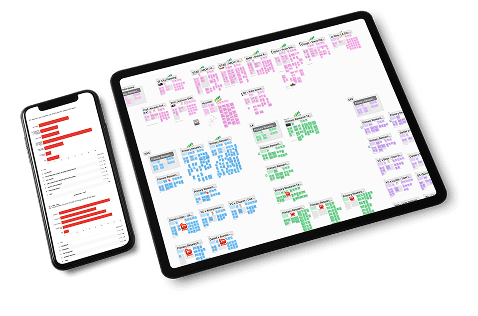
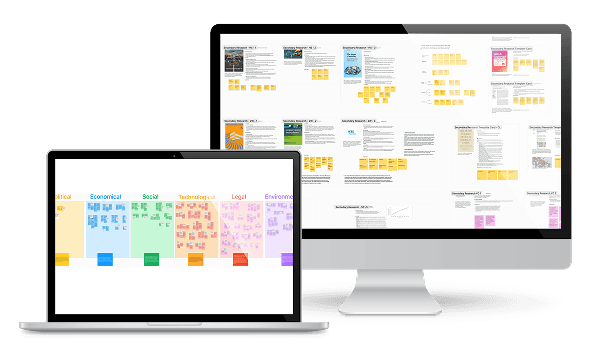
Understanding the forces shaping the future of mobility
We began by defining the scope of the project around Gen Z living in urban areas in the United States. Secondary research, including a PESTEL analysis and a range of mobility case studies, helped us understand the broader landscape and identify the forces that could influence mobility in the future.
We then conducted primary research to bring the perspective of users and industry professionals into the conversation. A survey generated more than 200 responses, while interviews with Gen Z users and mobility experts helped us explore behaviors, expectations, and emerging needs in greater depth.
To make sense of this complexity, we developed a Layers of Design framework that mapped the technological, social, environmental, economic, and contextual factors influencing how people live and move.

Translating research into opportunities for the future
As we synthesized our research, we began identifying recurring needs and opportunity spaces across the mobility ecosystem. We developed a scenario framework that connected these needs with broader tensions around functionality and delight, as well as public and private mobility.
This framework allowed us to move beyond predicting a single future and instead explore multiple possible directions. We identified three distinct scenarios: Optimized Integration, Infinite Indulgence, and Amplified Joy, each representing a different way mobility could evolve in response to Gen Z's needs.

Turning future scenarios into tangible opportunities
For each scenario, we developed design interventions that demonstrated what these possible futures could look and feel like.
Optimized Integration explored functional, connected public transportation through concepts such as AI-powered mapping, personalized mobility planning, and integrated urban transportation networks.
Infinite Indulgence explored individualized mobility, focusing on customization, autonomy, and personalized services.
Amplified Joy imagined a more socially connected future where mobility could facilitate shared experiences, community, and delight.
Together, these concepts transformed abstract research and future scenarios into tangible opportunities that could be explored, discussed, and communicated through the final research report.
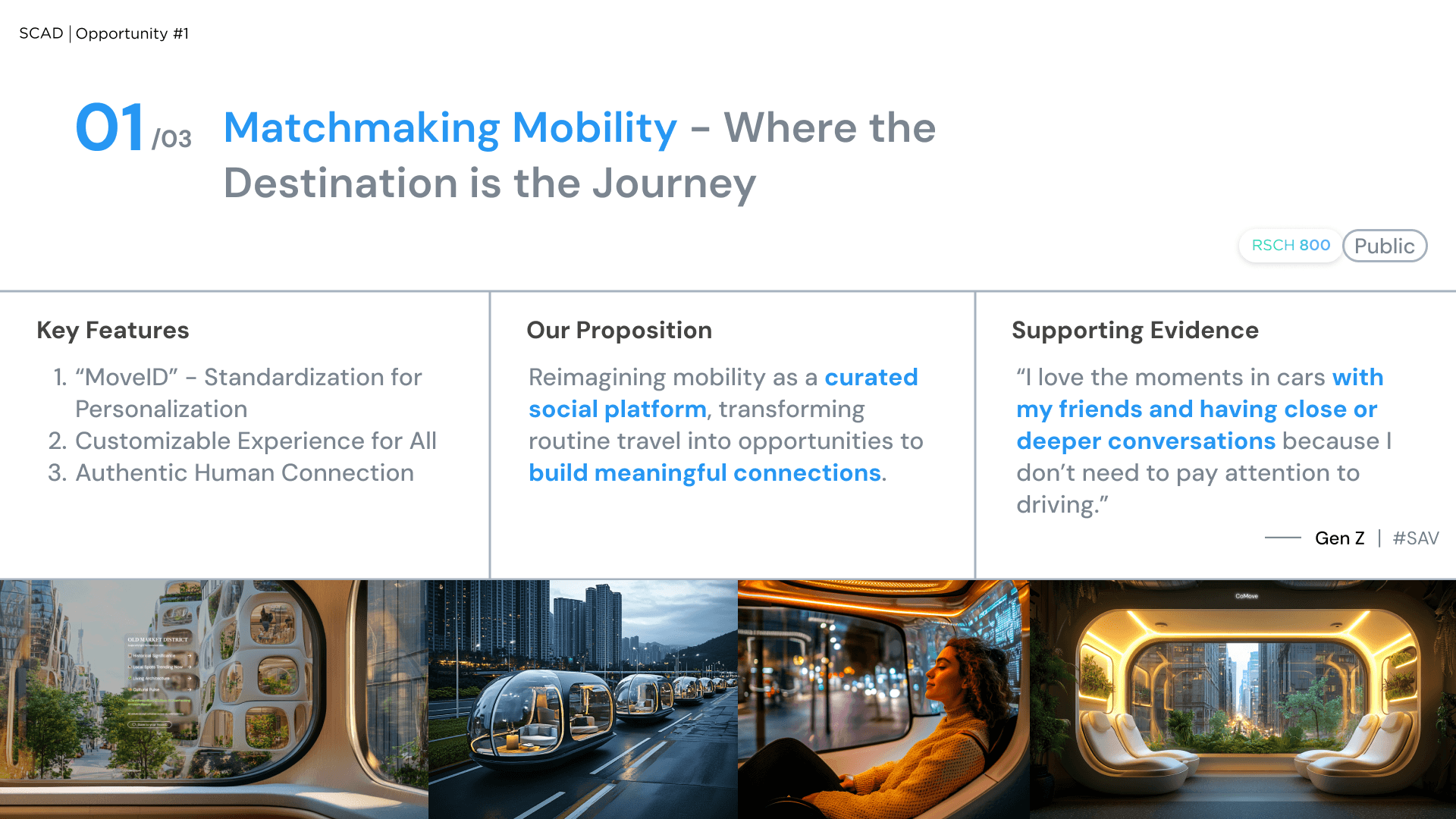
Developed a comprehensive research report exploring the future of mobility through the lens of Gen Z.
Synthesized primary and secondary research into key needs and opportunity spaces.
Created a framework for understanding the complex ecosystem of factors influencing mobility.
Developed three distinct future scenarios to explore alternative directions for mobility.
Translated each scenario into tangible design interventions and opportunity areas.
Created a visual research tool that communicated complex systems and future possibilities in an accessible way.

